


Pain in the lumbar region is the most common pain syndrome in outpatient practice.30-60% of the population in developed countries suffer from recurrent back pain, and up to 80% of all back pain occurs in the lumbar region (lower back).All age groups can suffer from low back pain, but the peak incidence occurs between the ages of 30 and 60.
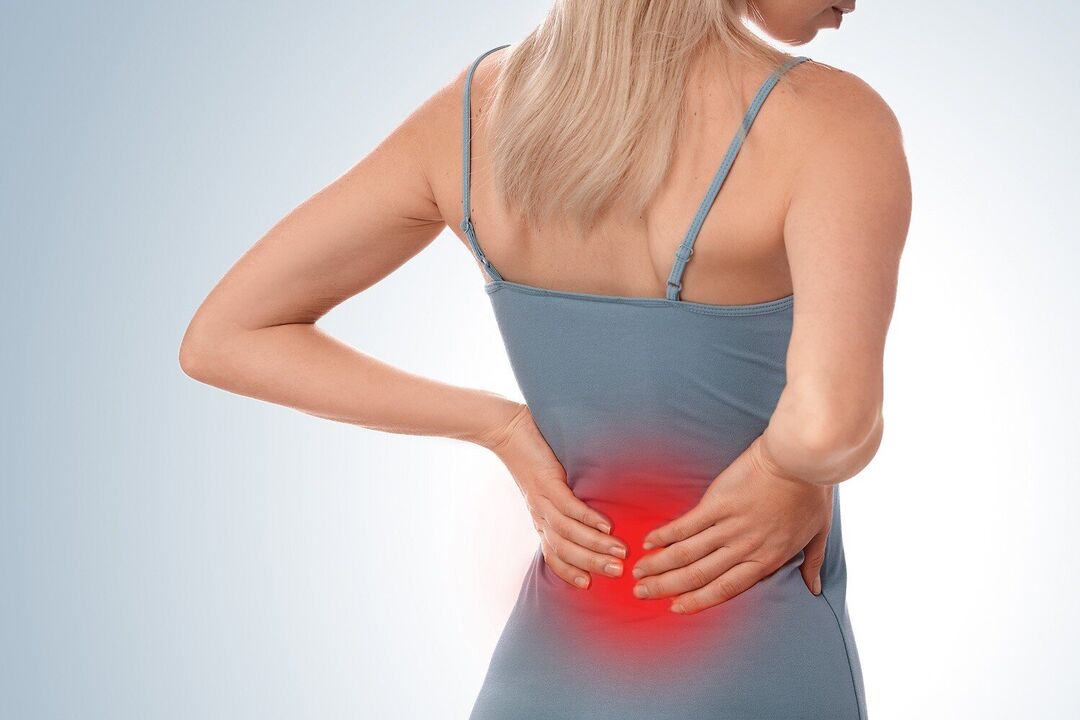
Pain in the lumbar region due to illness
Lower back pain is a nonspecific symptom that can be caused by many reasons.Doctors distinguish between primary and secondary lumbar pain syndromes.Most pain in the lumbar region is due to musculoskeletal morphofunctional changes (primary low back pain syndrome).These are mainly degenerative-dystrophic lesions of the spine:
Possible causes of secondary low back pain syndrome:
- Primary and metastatic tumors of the vertebrae, spinal cord, retroperitoneal space.
- Vertebral fractures.
- Infectious lesions of the vertebrae and intervertebral discs (tuberculosis, brucellosis, epidural abscess).
- Non-infectious inflammatory diseases (ankylosing spondylitis, Reiter's syndrome, rheumatoid arthritis).
- Metabolic bone lesions (osteoporosis, osteomalacia).
- Growing pains (scoliosis).
- Acute spinal circulatory disorders (stroke).
- Diseases of the gastrointestinal tract (atypical course of acute appendicitis, intestinal obstruction).
- Referred pain in diseases of the pelvic organs (including renal colic, infectious gynecological diseases, such as chlamydia, gonorrhea, trichomoniasis, ureaplasmosis, adnexitis).
Pain in the lumbar region can also be acute or chronic and the causes are damage to the spine or nerve roots.Possible displacement of pain from deeper structures:
- kidneys;
- pancreas;
- colon;
- pelvic organs;
- retroperitoneal tumors.
Sharp pain in the lumbar region
Acute sprain.The pain is localized in the area of the long back muscles during spasm, which causes limitations in movement.There is no shift of pain to the groin area or lower extremities.
Vertebral fractures.Usually this is a consequence of an injury when bending or falling on the legs, but the same result can be without injury or with minimal trauma if the patient has an affected skeletal system, osteoporosis, Cushing's syndrome, hyperparathyroidism, myeloma, metastasis of malignant tumors in the bones, Paget's disease.
Displacement of the intervertebral discs in the lumbar region.Symptoms of this disease include pain in the lumbar region, forced position of the body and limited mobility.Participation of nerve roots in the pathological process is indicated by: radicular pain, usually unilateral;sensitivity disorders (paraesthesia, hyperesthesia or hyperalgesia);Decreased or absent Achilles or knee reflex.
Facet syndrome.Compression of the root as it exits the spinal canal causes radicular pain that is not caused by damage to the disc.Unilateral facet syndrome, which is most often associated with the L5 root, occurs when the superior and inferior facets of the intervertebral joint are enlarged, which results in a narrowing of the intervertebral canal or foramen.
Epidural abscess.It is most often found in the thoracic spine and may be accompanied by sharp back pain when palpating or touching the affected area.It requires rapid diagnosis and initiation of therapeutic measures, including surgery, if there are signs of spinal cord compression.Pathological processes in the hip joint may be accompanied by pain radiating to the gluteal region and lower extremities up to the knee joint.
Chronic back pain
Deforming spondylosis.Spondylosis deformans is a degenerative alteration of the lumbar vertebrae with the formation of bone spurs that narrow the spinal canal and put pressure on the roots.If lumbosacral pain manifests with neurological symptoms during walking (loss of sensation, sensory disturbances, or weakness in both lower extremities), an intermittent claudication syndrome associated with the spine and resulting from a narrowing of the spinal canal is suspected.The diagnosis is confirmed by examination.
Ankylosing spondylitis.It should be suspected in young people with lower back pain that moves to the hips.First, there is limited mobility and morning stiffness, decreased respiratory movements of the chest, and progressive curvature and flexion of the thoracic spine.Radiographic signs: destruction and restructuring of the sacroiliac joints, formation of the so-called “bamboo” spine.Similar symptoms with limited movement in the lower spine can occur with:
- psoriatic arthritis;
- Reiter's syndrome;
- chronic colitis.
Tumors and their metastases, metabolic diseases.Using radiography and myelography, it is necessary to exclude the following pathological conditions: metastatic carcinoma (breast, lung, prostate, thyroid, kidney, gastrointestinal tract), myeloma, lymphoma.
Osteomyelitis.Caused by pyogenic bacteria (usually staphylococci) or Mycobacterium tuberculosis;the possibility of these infections must be confirmed or excluded by determination of ESR, bone x-ray and tuberculin skin test.
Intradural tumors:
- neurofibroma;
- meningioma;
- lipoma
The above tumors can cause chronic pain even before other neurological symptoms appear.Mobile pain in the lumbar region due to diseases of internal organs.When the pelvic organs are affected, the pain moves to the sacral region, to the organs of the lower abdominal cavity - to the lumbar segments, to the upper abdominal cavity - to the lower thoracic and upper lumbar segments.There are no local symptoms or back stiffness;full back movements do not increase pain.
Treatment
With osteochondrosis of the lumbar spine, the patient feels pain in the lower back when walking, sitting, lifting heavy objects, coughing, sneezing.Lower back pain sometimes radiates to the leg.In this case, you need to urgently contact a neurologist.
Don't delay your visit to the doctor if:
- feel severe lower back pain for more than 3 days;
- the pain occurred after the injury;
- at the same time you feel pain in the lower back, lower leg and foot;
- pain in the lower back is combined with numbness in the buttock, thigh, leg, foot and groin area.
Lower back pain is a fairly common symptom, especially in older people.Rheumatism, lumbar osteochondrosis and radiculitis - all these diseases cause acute pain in the lumbar region.Only a proper body exam can show the results and give a clear answer about the causes of back pain.